
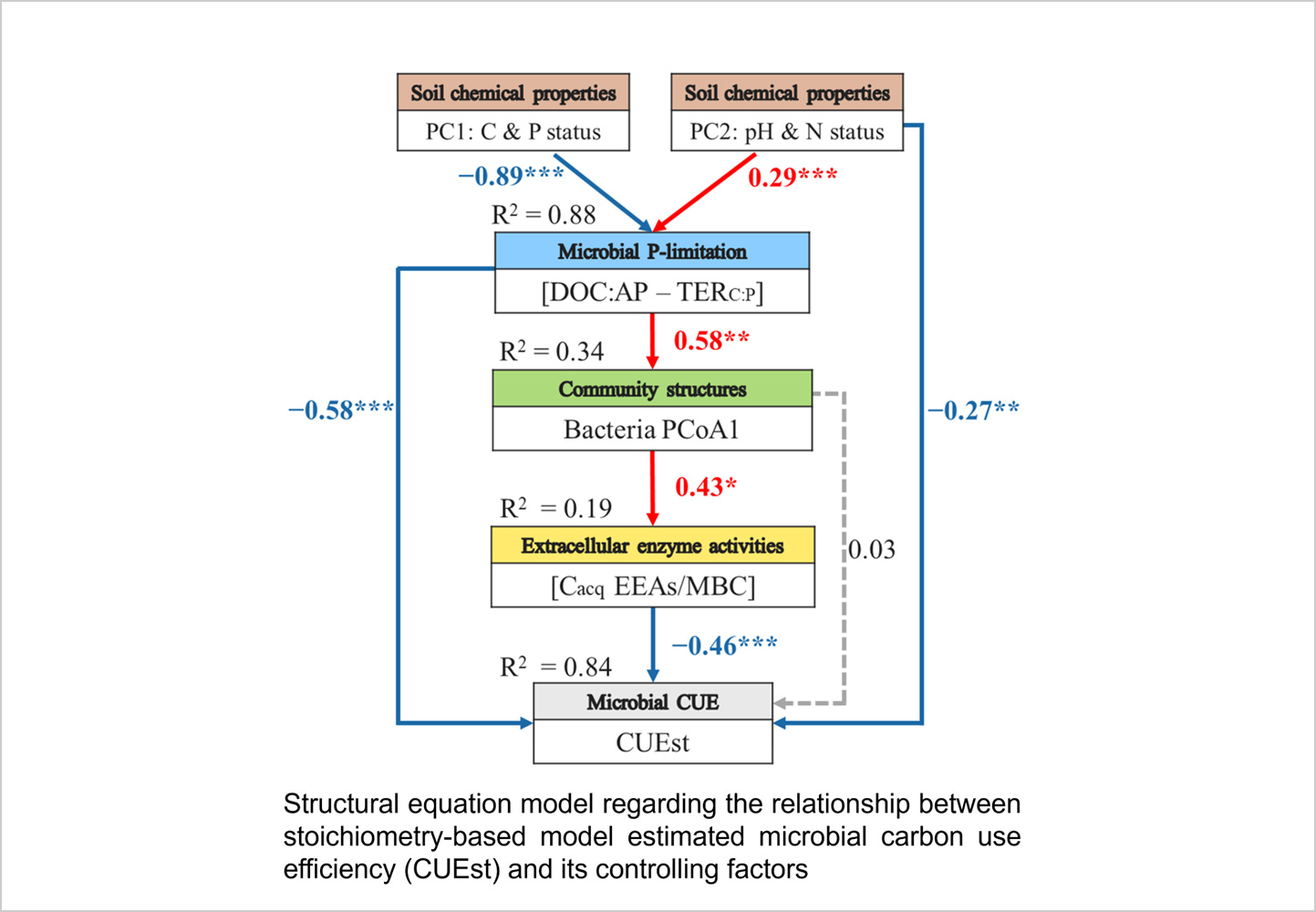
Microbial carbon use efficiency (CUE) is a critical indicator of soil organic carbon (SOC) dynamics, as it dictates the balance between carbon sequestered in microbial biomass and carbon lost to the atmosphere as CO2. Through a 36-year long-term fertilization experiment on Japanese Andosols, this study elucidates how nutrient supply influences microbial metabolic strategies and CUE. Our results showed that enhancing CUE requires alleviating microbial phosphorus (P) limitation by increasing the availability of carbon and P and optimizing their stoichiometric balance. This alleviation not only directly improves CUE but also triggers a shift in the dominant microbial community from “Resource Acquirers” to “High Yielders“. This strategic shift enables microbes to suppress the production of costly C-acquiring enzymes, thereby conserving metabolic energy and indirectly boosting CUE. Long-term NPK fertilization significantly improved CUE (from ~0.20 in P-deficient plots to ~0.35 in NPK plots) by alleviating P-limitation and driving this transition in life strategies. These findings highlight that optimized P management is key to maximizing SOC sequestration in Andosols by balancing “nutrient acquisition” and “energy conservation” within microbial community.
Lyu, H. et al., Environmental Research 277: 121598, 2025. https://doi.org/10.1016/j.envres.2025.121598
